
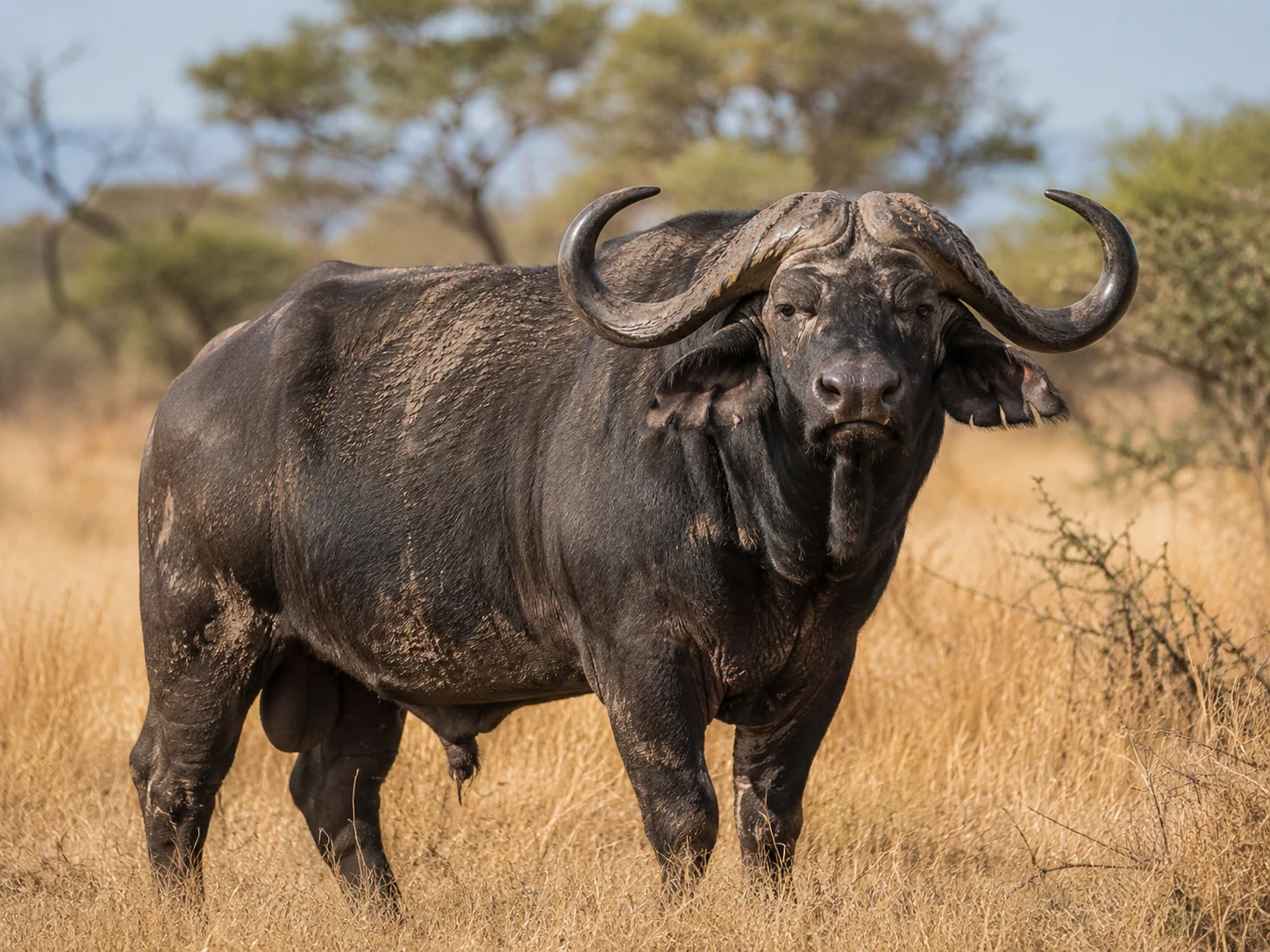
Field observation
What should you notice first?
Begin with the whole animal and the whole scene. A confident identification comes from several independent clues—not from moving closer.
What first-time visitors usually notice
- A tightly bunched herd may be responding to danger or preparing to move.
- A lone bull in shade or mud still needs considerable space.
- Oxpeckers can reveal ticks, wounds and the animal's tolerance of close bird activity.
What experienced guides look for
- Dust, dung and many overlapping tracks that indicate a herd has passed.
- The herd's outer animals facing outward while calves stay more central.
- Lion attention, because buffalo and lions strongly influence each other's behaviour.
Interpretation
What might the behaviour mean?
Herds walk, graze, ruminate, drink, wallow and rest together. Buffalo may defend calves or vulnerable herd members collectively.
Social structure
Large herds include females, calves and younger males. Older males may form bachelor groups or live alone, especially near reliable water.
Communication
Low calls, grunts, scent, posture and coordinated movement keep herds together. A raised head and fixed attention should be taken seriously.
Breeding
Calves are born into the protection of the herd. Breeding timing is influenced by nutrition and rainfall.
Regional context
Where does this encounter fit?
Residential bushveld context
Buffalo do not normally roam through Marloth Park's residential area. They may be viewed across the Crocodile River or in Southern Kruger.
Park and river context
Regularly encountered in suitable areas, as herds, bachelor groups or solitary older bulls.
Best places to look
Look across the Crocodile River from safe Marloth viewpoints. In Southern Kruger, water sources, river roads and broad grazing areas can be productive.
Best time of day
Buffalo may be seen all day; visits to water and shade often increase in hotter periods.
Seasonal behaviour
Dry-season herds may concentrate around permanent water and remaining grass. Summer resources can spread them more widely.
Ecosystem role
How does this animal fit into the Lowveld?
Buffalo use grassland, woodland and river systems where grazing and frequent water are available. Herd size and movement change with resources.
Conservation meaning
Buffalo need extensive habitat, water and disease-aware conservation management. They are ecologically important prey and grazers, not simply a 'Big Five' target.
During the encounter
Photograph and view without changing the behaviour.
Photography
- Show herd scale with a wider composition.
- Use oxpeckers, mud and dust to add behavioural context.
- Never pressure a bull to turn toward the camera.
Ethical viewing
- Avoid splitting a herd with vehicles.
- Give calves and resting bulls extra room.
- Do not crowd a buffalo-lion interaction or influence either side.
Safety
- Buffalo are powerful and potentially dangerous. Never approach on foot.
- Keep a clear route when a herd crosses the road.
- Do not position between separated herd members.
Visitor questions
Curiosity without exaggeration.
Common myths
Individuals vary, but all buffalo deserve caution because their power and defensive reactions can be rapid.
A vehicle can split families and create stress. Wait for a clear opening.
Frequently asked questions
Are buffalo found inside Marloth Park?
They are not normally free-roaming in the residential area. Look across the river or in Southern Kruger.
Why do buffalo wallow?
Mud can help with cooling, skin care and irritation from biting insects.
Why are buffalo dangerous?
They are heavy, strong and capable of defending themselves or the herd. Risk increases when they are surprised, cornered or approached on foot.
Junior Explorer fact
A buffalo herd can form a defensive wall, with vulnerable calves protected inside.
- The fused horn base of a mature bull is called a boss.
- Older bulls are sometimes called 'dagga boys' because of their mud-covered appearance.
- Buffalo can carry many oxpeckers, which feed on ticks and inspect wounds.
Evidence and review
Scientific and park sources.
Sources support the biological facts and regional context. Field conditions remain variable, and new evidence should trigger review rather than silent correction.
- Kruger National Park Mammals Checklist — South African National Parks
- Mammals of Kruger National Park — South African National Parks
- African Buffalo assessment — IUCN Red List