
Field observation
What should you notice first?
Begin with the whole animal and the whole scene. A confident identification comes from several independent clues—not from moving closer.
What first-time visitors usually notice
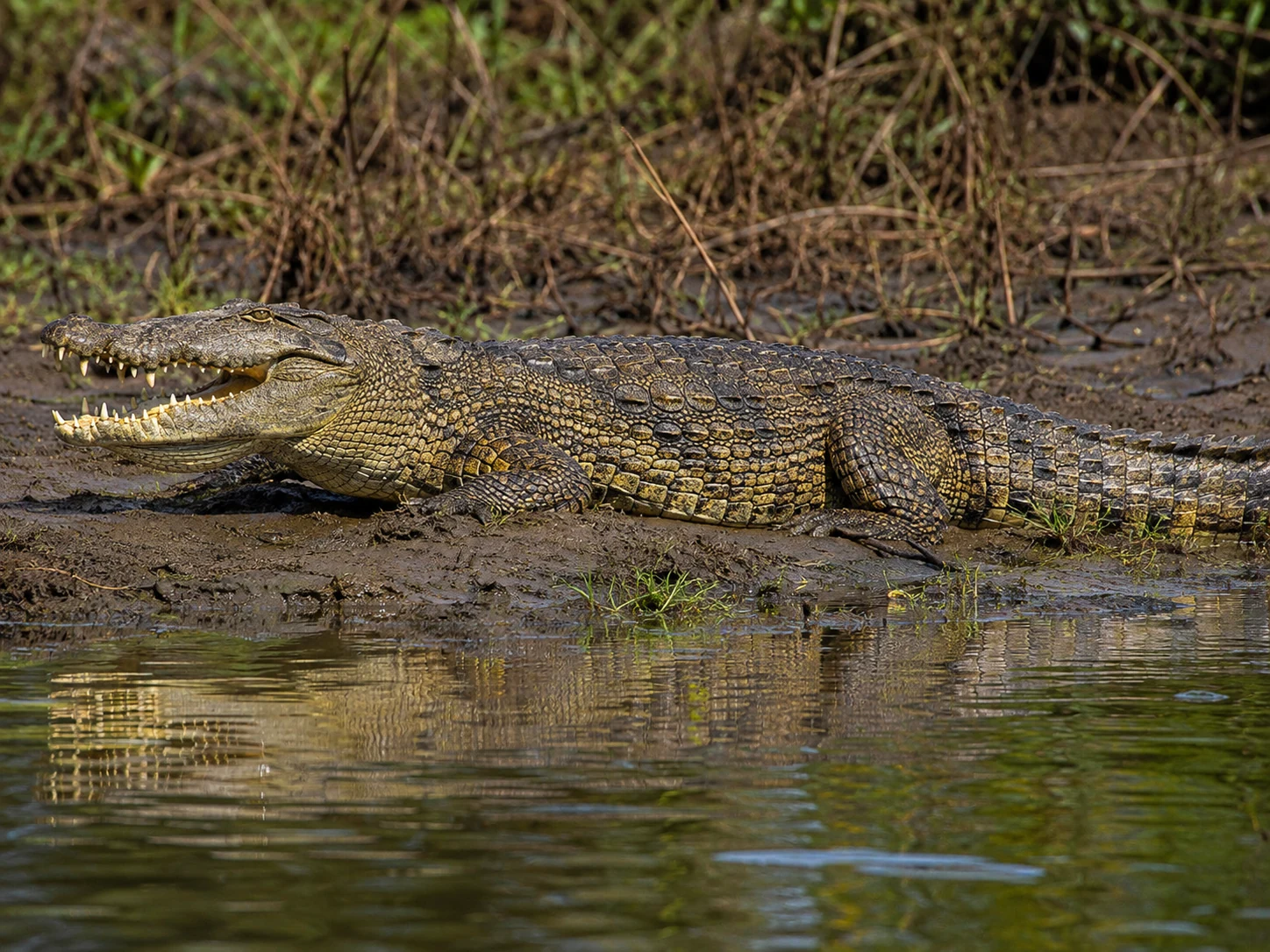
- Open-mouth basking usually helps cooling; it does not automatically mean the crocodile is about to attack.
- Only a small portion of the head may be visible in water.
- Slide marks, tracks and flattened basking places reveal regular use of a bank.
What experienced guides look for
- Quiet shallows near drinking points.
- Sandbanks receiving morning sun.
- Birds reacting to movement at the water edge and animals hesitating before drinking.
Interpretation
What might the behaviour mean?
They bask, float, patrol territories, ambush prey and sometimes cooperate loosely around concentrated food. Much of their success comes from patience.
Social structure
Crocodiles are not herd animals, but several may share good habitat. Larger individuals often dominate access to food and basking sites.
Communication
Hisses, bellows, water vibrations and body posture communicate, while hatchlings call from the nest.
Breeding
Females lay eggs in nests on land and may guard the nest and assist hatchlings to water. Temperature during incubation influences sex.
Regional context
Where does this encounter fit?
Residential bushveld context
Nile crocodiles occur in the Crocodile River and may be viewed from safe Marloth Park viewpoints.
Park and river context
Present in major rivers, dams and pools across Southern Kruger.
Best places to look
Scan the Crocodile River from established Marloth viewpoints. In Southern Kruger, check sandbanks, dams, bridges and quiet river bends without leaving permitted areas.
Best time of day
Cool mornings often encourage basking. In extreme heat, crocodiles may remain in water or shade.
Seasonal behaviour
Water levels change basking, nesting and feeding opportunities. Low water can concentrate fish and crocodiles in remaining pools.
Ecosystem role
How does this animal fit into the Lowveld?
Nile crocodiles use rivers, dams, pools and wetlands. Stable banks and suitable nesting sites are important for breeding.
Conservation meaning
The global category can hide local pressures. Healthy crocodile populations depend on clean, connected rivers, secure nesting banks and tolerance from people.
During the encounter
Photograph and view without changing the behaviour.
Photography
- Use binoculars or a long lens from a protected position.
- Include ripples, reflection or the drinking animals around it to show context.
- Never step closer to the waterline because a crocodile appears motionless.
Ethical viewing
- Do not throw food or bait into water.
- Avoid disturbing nesting banks.
- Observe from designated viewpoints and vehicles.
Safety
- Stay well back from every river, dam and unprotected bank in crocodile habitat.
- Never assume shallow water, a small pool or lack of visible crocodiles is safe.
- Keep children and pets away from the water edge.
Visitor questions
Curiosity without exaggeration.
Common myths
Crocodiles can launch from shallow edges and move on land. Distance from the bank is essential.
Their camouflage and low profile make them extremely difficult to detect.
Frequently asked questions
Are there crocodiles in the Crocodile River at Marloth Park?
Yes. Treat the river and its banks as crocodile habitat and view only from safe, established places.
Why do crocodiles lie with their mouths open?
This often helps them cool down while basking.
Can crocodiles climb?
They can negotiate banks, slopes and low obstacles better than many visitors expect.
Junior Explorer fact
A baby crocodile calls from inside the egg, helping its mother know hatching is near.
- Crocodiles can replace teeth many times during life.
- An open mouth during basking helps release heat.
- The tail provides most of the power for swimming.
Evidence and review
Scientific and park sources.
Sources support the biological facts and regional context. Field conditions remain variable, and new evidence should trigger review rather than silent correction.
- Mammals of Kruger National Park — South African National Parks
- Nile Crocodile assessment — IUCN Red List