
Field observation
What should you notice first?
Begin with the whole animal and the whole scene. A confident identification comes from several independent clues—not from moving closer.
What first-time visitors usually notice
- A group may look relaxed while one animal remains alert. Watch which way the ears point.
- Sudden snorts, stamping or a tightly focused stare may show that something has disturbed the herd.
- During the rut, males become more vocal, chase rivals and spend less time feeding.
What experienced guides look for
- Several animals staring in the same direction—often more useful than looking randomly for a predator.
- Oxpeckers lifting off abruptly, which can show that the herd has become unsettled.
- Different group types: nursery herds, bachelor groups and territorial males.
Interpretation
What might the behaviour mean?
They are excellent jumpers, but most of their day is less dramatic: feeding, ruminating, grooming and watching. Their alarm behaviour is one of the easiest ways for a visitor to begin reading the wider landscape.
Social structure
Females and young often form herds. Males may live in bachelor groups or hold temporary territories, especially during the autumn rut.
Communication
Snorts, grunts, scent marking, posture and ear position all carry information. A sharp alarm snort is a cue to stop talking, scan carefully and observe what the herd is watching.
Breeding
Most lambs are born in a fairly concentrated early-summer period after the first good rains. This timing gives mothers better forage and young animals fresh cover.
Regional context
Where does this encounter fit?
Residential bushveld context
Frequently seen around Marloth Park roads, open stands and holiday homes. A sighting is never guaranteed, but impala are among the most familiar local neighbours.
Park and river context
Widespread in suitable woodland and savanna across Southern Kruger, often in herds.
Best places to look
In Marloth Park, look along quiet roads, open verges and unfenced stands. In Southern Kruger, scan woodland edges, drainage lines and open areas along most routes.
Best time of day
Early morning and late afternoon are comfortable viewing periods, although impala can be seen throughout the day.
Seasonal behaviour
The rut is usually most noticeable in autumn. Lambing is associated with the early wet season, but timing can shift with local rainfall.
Ecosystem role
How does this animal fit into the Lowveld?
Impala favour woodland edges, open savanna and places where grass and browse occur close together. They usually stay within reach of water, but their exact movements change with rainfall and food quality.
Conservation meaning
Impala remain widespread, but they are not disposable 'background animals'. Their grazing, browsing and role as prey connect many parts of the Lowveld food web.
During the encounter
Photograph and view without changing the behaviour.
Photography
- Photograph behaviour rather than only portraits: grooming, vigilance, sparring and mothers with lambs tell a stronger story.
- Leave space in front of the animal's gaze or movement.
- Do not whistle, clap or move closer to force an animal to lift its head.
Ethical viewing
- Do not feed impala. Feeding changes natural behaviour and draws animals into risky situations around roads and homes.
- Allow the herd to decide whether to remain or move away.
- Keep noise low when animals are alarmed or mothers have very young lambs.
Safety
- Keep a respectful distance even when impala appear calm.
- Never block a herd's route between cover, water and feeding areas.
- Drive slowly in Marloth Park; an impala can change direction suddenly.
Visitor questions
Curiosity without exaggeration.
Common myths
Their alarm signals, social groups and seasonal behaviour make them one of the best species for learning to interpret the bush.
A snort shows concern or alertness. The cause may be a predator, a person, a vehicle or another disturbance.
Frequently asked questions
Why do impala stare in one direction?
They may have seen, heard or smelled something unusual. Follow their gaze carefully, but do not assume a predator is definitely present.
Do female impala have horns?
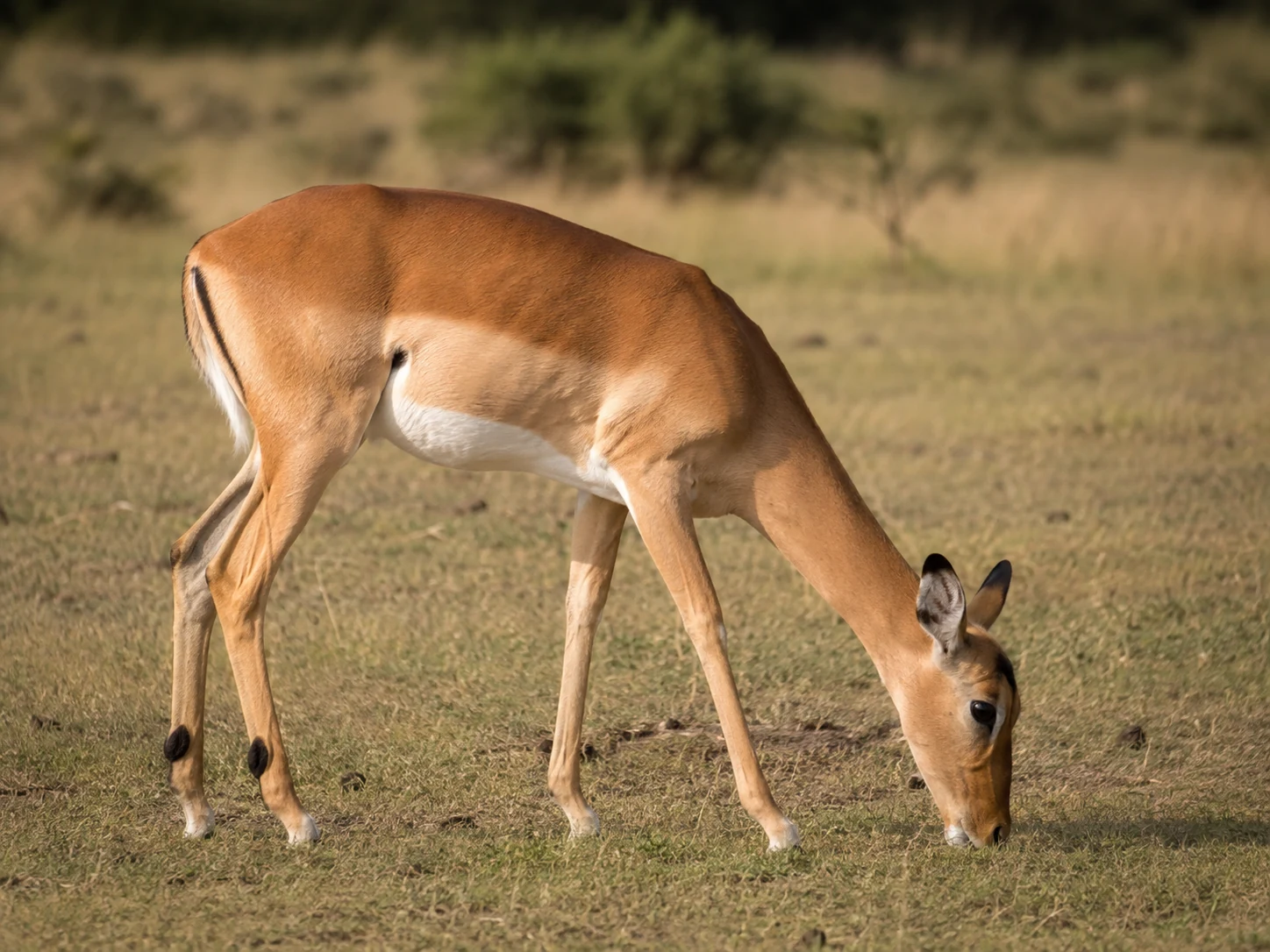
No. In the local subspecies, the ridged horns belong to males.
Can I feed impala at my Marloth Park home?
No. Feeding makes animals approach people and roads, changes their natural diet and can increase conflict.
Junior Explorer fact
An impala can spring high and far, but its sharp eyes, ears and nose are just as important as its legs.
- The black marks above the hind feet cover scent glands.
- A herd staring together can act like a living signpost toward hidden activity.
- Impala are mixed feeders, so calling them only grazers is incorrect.
Evidence and review
Scientific and park sources.
Sources support the biological facts and regional context. Field conditions remain variable, and new evidence should trigger review rather than silent correction.
- Kruger National Park Mammals Checklist — South African National Parks
- Mammals of Kruger National Park — South African National Parks
- Impala assessment — IUCN Red List