
Field observation
What should you notice first?
Begin with the whole animal and the whole scene. A confident identification comes from several independent clues—not from moving closer.
What first-time visitors usually notice
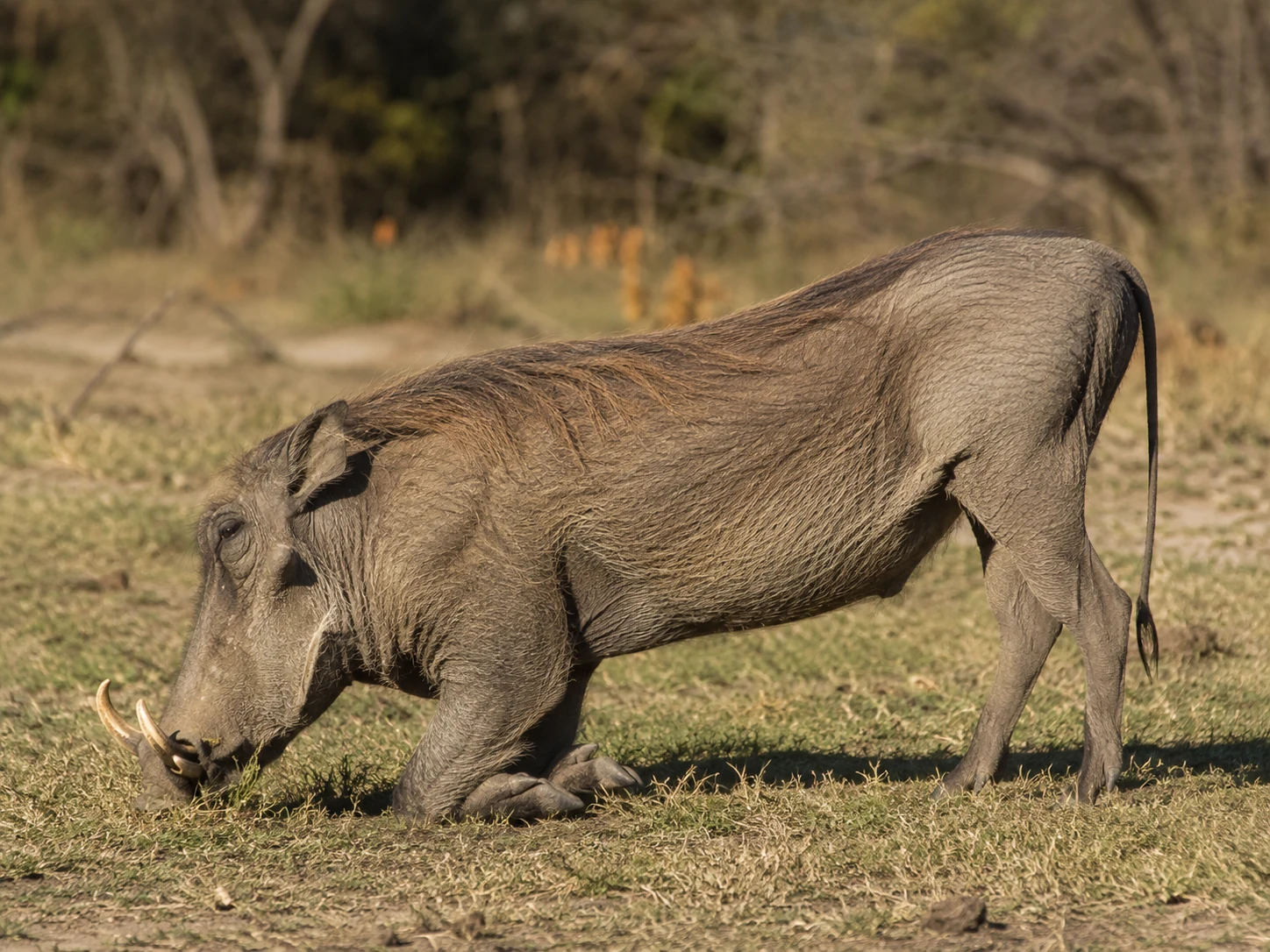
- Kneeling is normal feeding behaviour, not an injury.
- An upright running tail may help family members follow through grass.
- A warthog often reverses into a burrow so its tusks face outward.
What experienced guides look for
- Fresh digging, cropped grass and tracks around burrow entrances.
- Whether young piglets remain close to a sow or rush toward cover.
- Mud coating, which can help with cooling and skin protection.
Interpretation
What might the behaviour mean?
They feed on foot or kneel on their wrists. Wallowing, rubbing, running to burrows and social grooming are useful behaviours to watch.
Social structure
Females and young live in family groups called sounders. Adult males are often solitary outside mating periods.
Communication
Grunts, squeals, snorts, scent and body posture communicate alarm, contact and conflict.
Breeding
Piglets are born in a burrow and remain vulnerable to cold and predators. A sow may use the shelter defensively.
Regional context
Where does this encounter fit?
Residential bushveld context
Frequently encountered on Marloth Park verges, open stands and roadsides.
Park and river context
Widespread in open woodland and grassland, especially where short grass and burrows are available.
Best places to look
In Marloth Park, watch short-grass verges and quiet open stands. In Southern Kruger, scan open ground near water, picnic-site approaches and areas with old termite mounds or burrows.
Best time of day
Most active in daylight, particularly mornings and afternoons.
Seasonal behaviour
Dry conditions may concentrate warthogs near water and green grazing. After rain they spread into newly productive areas.
Ecosystem role
How does this animal fit into the Lowveld?
Warthogs favour savanna and open woodland with grazing, water and access to burrows. They avoid the hottest conditions by resting in shade or underground.
Conservation meaning
Warthogs cope well in many protected landscapes, but feeding and road pressure around residential wildlife areas can create avoidable risk.
During the encounter
Photograph and view without changing the behaviour.
Photography
- Get low only from a safe, permitted position—not by leaving a vehicle in Kruger.
- Wait for kneeling, tail-up running or family interaction.
- Do not block the route to a burrow.
Ethical viewing
- Do not feed warthogs or allow them to raid refuse.
- Give a sow with piglets extra space.
- Never put a camera or object into a burrow entrance.
Safety
- Tusks can cause serious injury if an animal is cornered.
- Never stand between a warthog and its burrow or young.
- Drive slowly when a family is crossing; piglets may follow late.
Visitor questions
Curiosity without exaggeration.
Common myths
Their features are specialised for defence, digging, feeding and survival, and they can run very quickly.
They often reverse in so the tusks and face remain toward the entrance.
Frequently asked questions
Why do warthogs kneel?
Their short neck makes close grazing easier when they rest on toughened wrist pads.
Why is the tail held up?
It may act as a visible follow signal, especially for young animals moving through grass.
Are warthogs dangerous?
They usually avoid people, but a cornered, injured or protective animal can use its tusks.
Junior Explorer fact
A warthog can run with its tail held straight up like a little flag.
- The facial 'warts' are thick pads of skin and tissue, not true warts.
- Warthogs often borrow burrows dug by aardvarks.
- Their wrist pads protect them while kneeling to graze.
Evidence and review
Scientific and park sources.
Sources support the biological facts and regional context. Field conditions remain variable, and new evidence should trigger review rather than silent correction.
- Kruger National Park Mammals Checklist — South African National Parks
- Mammals of Kruger National Park — South African National Parks
- Common Warthog assessment — IUCN Red List