The useful answer first
What you need to know
For a strong first morning, prepare documents, breakfast, clothing and camera equipment the night before. Check the official monthly gate opening time, leave Marloth Park slowly and arrive without racing wildlife-active roads. Inside Kruger, use a compact route with one planned stop and one optional extension. The purpose is to learn park pace and enjoy early light, not to complete an ambitious circuit before lunch.
Win the morning before going to bed
Place identification, booking confirmation, Wild Card details where relevant and payment method in one folder. Pack water, breakfast, medication and warm or rain layers. Charge cameras and phones, clean the windows and confirm fuel.
Agree who drives, who navigates and which gate-opening time applies. Set a quiet alarm and prepare coffee without waking the entire neighbourhood. A rushed house produces a rushed road.
- Gate time checked on the official page
- Documents and booking together
- Fuel and tyre check completed
- Breakfast and water packed
- Layers placed in the vehicle
- Route and return point agreed
Drive through Marloth Park as though wildlife will be on every corner
Animals may be active on the roads before dawn. Use low speed, appropriate lights and full attention. Do not follow another car closely through dust and do not recover lost time by accelerating.
If the departure is later than planned, accept a later gate arrival. Missing the first vehicles is disappointing; hitting wildlife or creating danger is unacceptable. The safari has already begun inside Marloth Park.
Make the gate process quiet and organised
Keep the vehicle queue moving by having documents ready and following staff instructions. Confirm the closing time before entering. If a day-visit reservation is required for the date, it should already be settled.
Use the rest-camp facilities if needed before beginning. A five-minute practical stop can prevent the first hour from being interrupted. Do not begin with everyone hungry, cold and searching through luggage.
Choose a route short enough to drive properly
The first route should include habitat variety without creating distance pressure. Use the direct road with one small loop or a local circuit that can return to the gate or continue only if the morning remains comfortable.
Stop often enough to scan but not at every movement. Learn the difference between a safe pull-off and blocking the road. Let faster vehicles pass. The first morning is where good safari habits should be established.
- Primary goal
- Learn pace, light and observation
- Anchor
- One authorised stop or clear turn-around point
- Extension
- Added only after checking time and group energy
- Success measure
- Quality of attention, not species count
Use early light without letting the camera control the vehicle
Low light requires stable support and realistic settings. Photograph wider scenes when subjects are distant or dark. Dust, silhouettes and backlight can create atmosphere without needing a close animal.
The driver should not position the car blindly for a passenger’s photograph. Safety, traffic and wildlife space come first. Once the light becomes harsh, shift attention to behaviour and habitat.
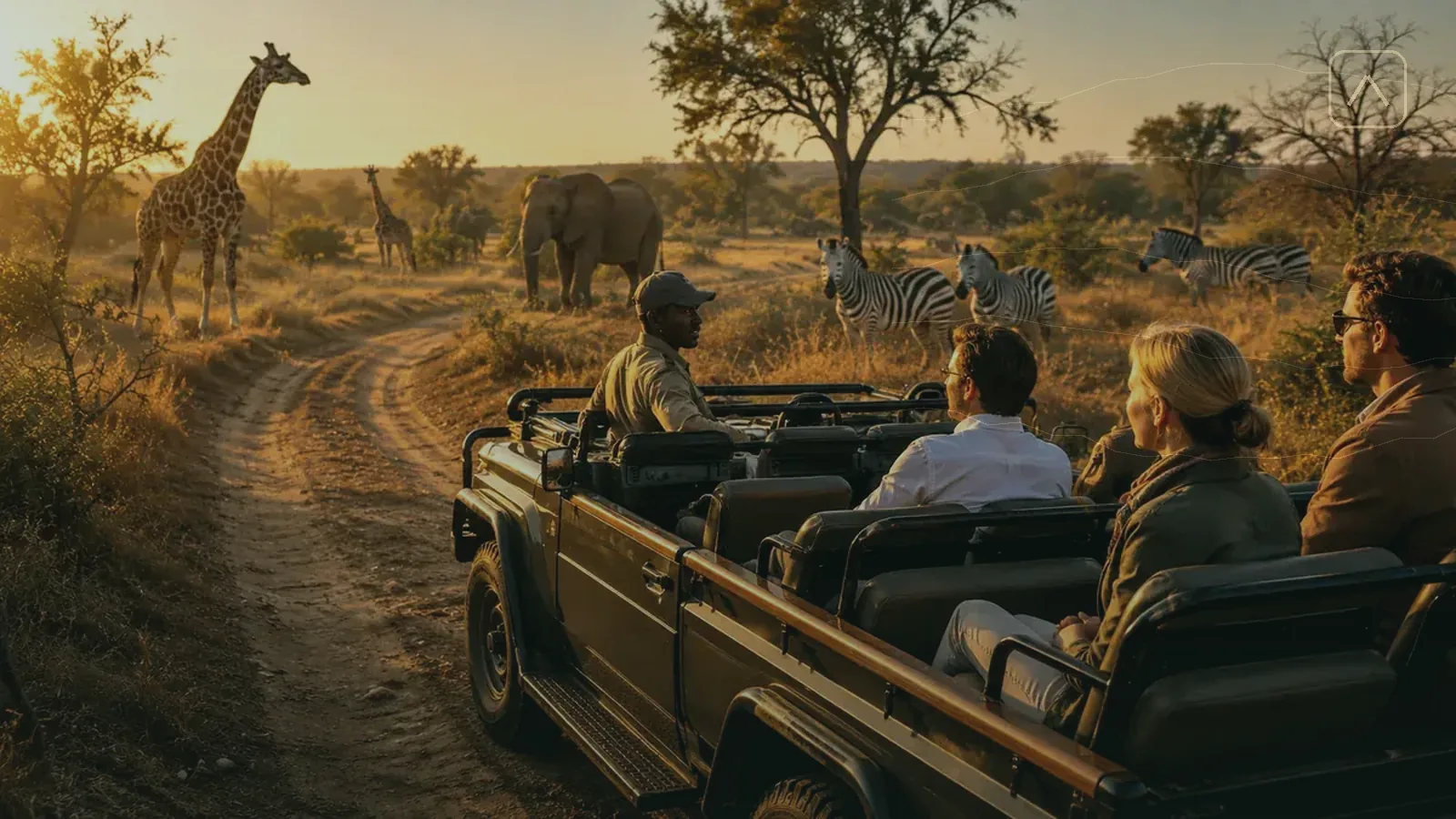
Choose a guided sunrise when both travellers want to watch
A guided vehicle allows all guests to observe and can add tracks, calls and habitat interpretation. It may also remove anxiety about the gate and route.
Confirm pickup location, clothing advice, age restrictions, vehicle type and whether fees are included. “Sunrise” may refer to departure time rather than being inside the park at first light.
Decide what happens after the first two hours
At a preselected junction or stop, assess the morning. If the group is cold, hungry or already satisfied, return toward Marloth Park for brunch. If energy is good and the route remains ahead of schedule, continue toward a modest anchor. Do not convert a short sunrise plan into a full-day drive without checking food, medication and the gate buffer.
Use the return journey to practise observation rather than treating familiar road as finished. Light direction has changed, animals may have moved and birds may be more active. A short morning can still contain a complete outward and return story.
Once back at the accommodation, reset the vehicle and rest. The value of a sunrise drive is partly that it leaves the afternoon open. Protect that advantage instead of filling it immediately with another demanding activity.
- Two-hour assessment point chosen
- Brunch-return option accepted
- Extension requires full day supplies
- Return road observed attentively
- Afternoon protected for recovery
Check before travelling
Official and practical planning links
Gate times, fees, road conditions, supplier availability and local operating details can change. Use these links as the final check before relying on any time-sensitive detail.
Quick clarifications
Frequently asked questions
What time should I leave Marloth Park?
Work backwards from the current official gate opening time, your property location and a slow wildlife-aware drive. Do not use one universal departure time.
Is sunrise guaranteed at the gate?
The gate schedule and season determine entry. In some months dawn and opening do not align exactly.
Where should a first morning route go?
Choose a compact southern loop or the direct road with a short turn-around. Lower Sabie is better reserved for a fuller day when the group understands travel pace.
Can I book a guided sunrise drive?
Operators may offer early drives with different pickup arrangements. Confirm whether pickup is in Marloth Park, at the gate or inside Kruger.