01Move from simple noticing to clues
At ages 6–8, a child can begin comparing clues: which track shape looks closest, what feature separates two animals, or why a behaviour is safe or unsafe. The answer still comes from what can be observed without approaching wildlife. “I am not sure” remains better than inventing evidence.
02The 13 fixed Junior Safari Ranger activities
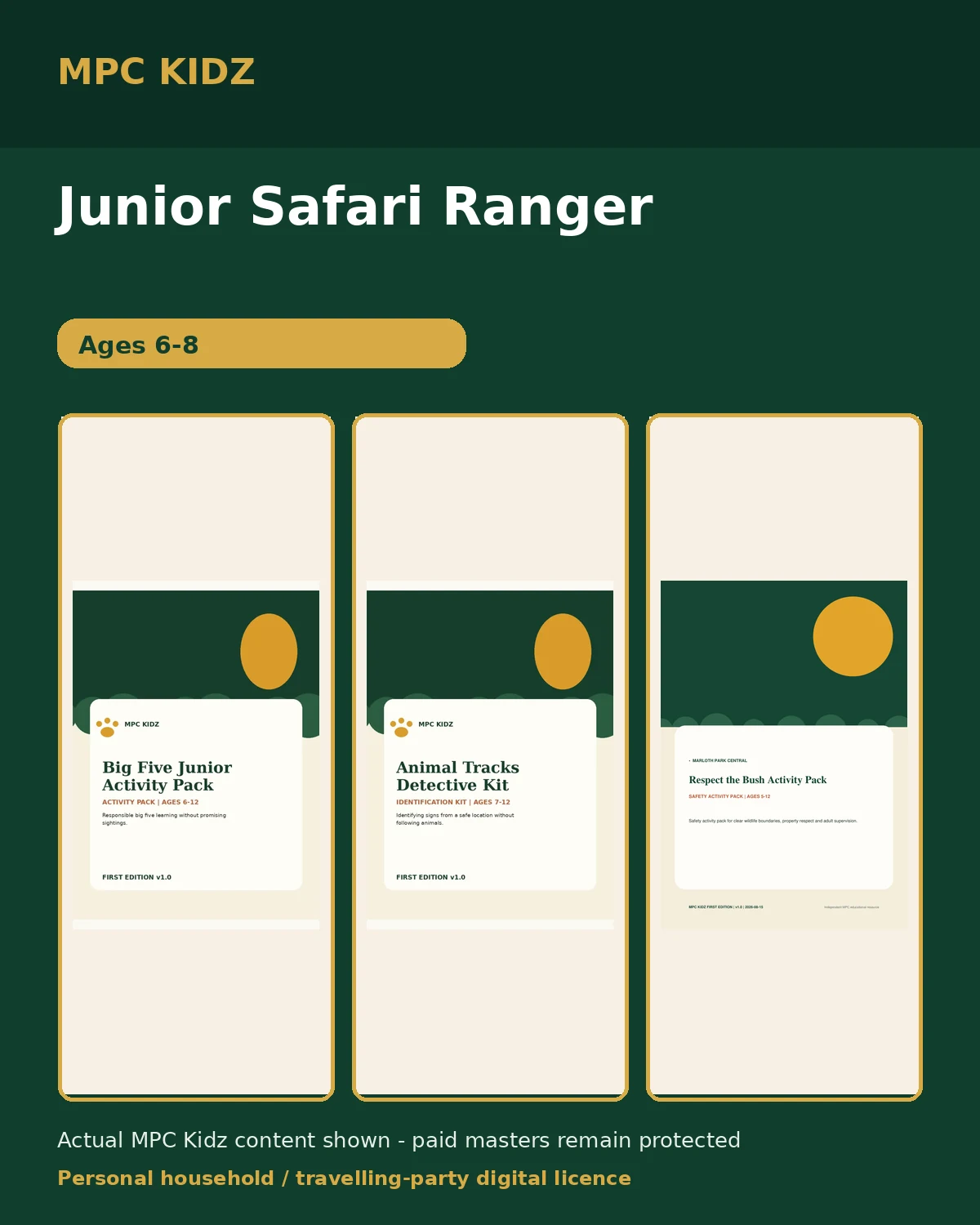
The manifest includes Big Five Junior Activity Pack, Bushveld Wildlife Bingo, Animal Matching Memory Cards, Animal Tracks Detective Kit, Marloth Park Animal Spotter Book, Respect the Bush Activity Pack, MPC Kidz Achievement Badge Set, Safari Scavenger Hunt Cards, My Marloth Park Holiday Journal, MPC Kidz Wildlife Passport, Safari Word Search Collection, Bushveld Maze Book and Marloth Park Treasure Hunt Kit.
03Ranger-style play should strengthen boundaries
MPC Junior Ranger material is educational, not an official ranger qualification. Tracks and signs are prompts for learning rather than invitations to follow animals. Adults decide where a child may stand, walk or observe, and current property, road and park rules override any game prompt.
04Balance activity with the actual safari
Use one clue or mission at a time. Put the material away when the driver needs quiet concentration or when a sighting becomes crowded. Back at the accommodation, the journal, passport, word search or maze can extend the memory without keeping the family at the sighting.