The useful answer first
What you need to know
Marloth Park can be an exceptional family base when adults choose the property for safety and routine, not only photographs. Prioritise secure sleeping areas, pool controls, clear wildlife boundaries and easy meals. Keep Kruger drives shorter than adult ambition suggests, schedule movement and rest, and teach children one simple rule: wild animals are watched quietly from a safe distance and never fed, chased or touched.
A successful family safari starts with the accommodation brief
Families often book from the hero photograph: a pool, a deck and a giraffe beyond the railing. The decision should begin one layer deeper. Ask how children move between bedrooms, bathrooms, living areas and the vehicle. Check whether the pool is fenced or covered, whether balcony rails are suitable, and whether exterior doors can be secured without trapping anyone during an emergency.
Also assess the rhythm of the house. Separate sleeping areas can look luxurious but complicate supervision. An elaborate open kitchen may be less useful than a simple space where breakfast can be prepared quietly before dawn. The best family property makes ordinary tasks easy while keeping the bush visible.
- Young children
- Prioritise contained sleeping areas, pool controls and direct supervision
- Teenagers
- Look for space, charging capacity and meaningful involvement in planning
- Multi-generation groups
- Reduce stairs, long walks and split accommodation zones
- Every family
- Confirm backup power, water, parking and emergency contacts
Teach a small number of rules and repeat them consistently
Children do not need a frightening lecture about every possible animal. They need clear boundaries that adults model. Wildlife is not approached, fed or blocked. Food stays inside. Exterior doors close behind you. Shoes and a torch are used after dark. No one runs toward a sighting, even when a zebra appears beside the driveway.
Explain the reason without turning the bush into a threat. Animals need space and an escape route. A quiet child often sees more because wildlife is less likely to move away. Give children responsibility appropriate to their age: checking the door, carrying the bird list or reminding the group that the car window stays closed near baboons.
Plan shorter Kruger days with better moments
Adult safari enthusiasm easily becomes a seven-hour drive with one bathroom break. For children, attention rises and falls. Start with a short route that includes a dependable rest stop, then extend only when the group is still engaged. Build in a breakfast pause, a walk inside an authorised camp area and a clear end point. The goal is not to keep children silent; it is to give them enough variation to remain curious.
Use sightings as prompts rather than a checklist. Ask what an elephant is using its trunk for, why impala stay in groups or which bird calls first. A child who notices behaviour is learning more than one who is told the species name repeatedly. Keep expectations honest: there may be quiet periods, and no route guarantees the Big Five.
- Start before attention is spent. Use the cool early hours and keep the first route modest.
- Stop before everyone is desperate. Plan toilets, breakfast and movement instead of waiting for complaints.
- Give each child a role. Navigator, bird recorder, snack monitor or photographer all work.
- End on a good note. Return while the group still has energy for the pool, lunch and wildlife at home.
A family vehicle kit prevents small discomforts becoming big arguments
Pack water, simple snacks, wipes, tissues, rubbish bags, sun protection, a light blanket and a change of clothing for younger children. Keep medication accessible and know which rest camps or picnic areas fit the route. Screens can be useful during a genuinely quiet return journey, but they should not become the only way a child tolerates the vehicle.
Secure loose objects and never allow children to stand through windows or sunroofs. Seat belts remain the default even at low speed. Wildlife can change direction suddenly, and another driver may brake for a sighting. The safest viewing position is seated, calm and inside the vehicle.
- Child seats or boosters confirmed with the vehicle provider
- Sun hats and refillable bottles for every child
- Binoculars sized for smaller hands
- Quiet activity for long waits or gate queues
- Familiar snacks that tolerate heat
- Emergency contact and medical details
Let Marloth Park provide the slow half of the family holiday
The accommodation is not merely where the family sleeps between Kruger drives. It is often where children notice the most: a warthog kneeling to graze, geckos around a light or birds using a water bowl. Protect unscheduled time on the veranda, at the pool under supervision and along appropriate daytime routes.
Avoid filling every afternoon with paid activities. Heat, early starts and sensory overload accumulate. A nap, a simple lunch and a sunset observation session can restore the group. This balance also protects the adults from turning the trip into a sequence of packing, loading and rushing.
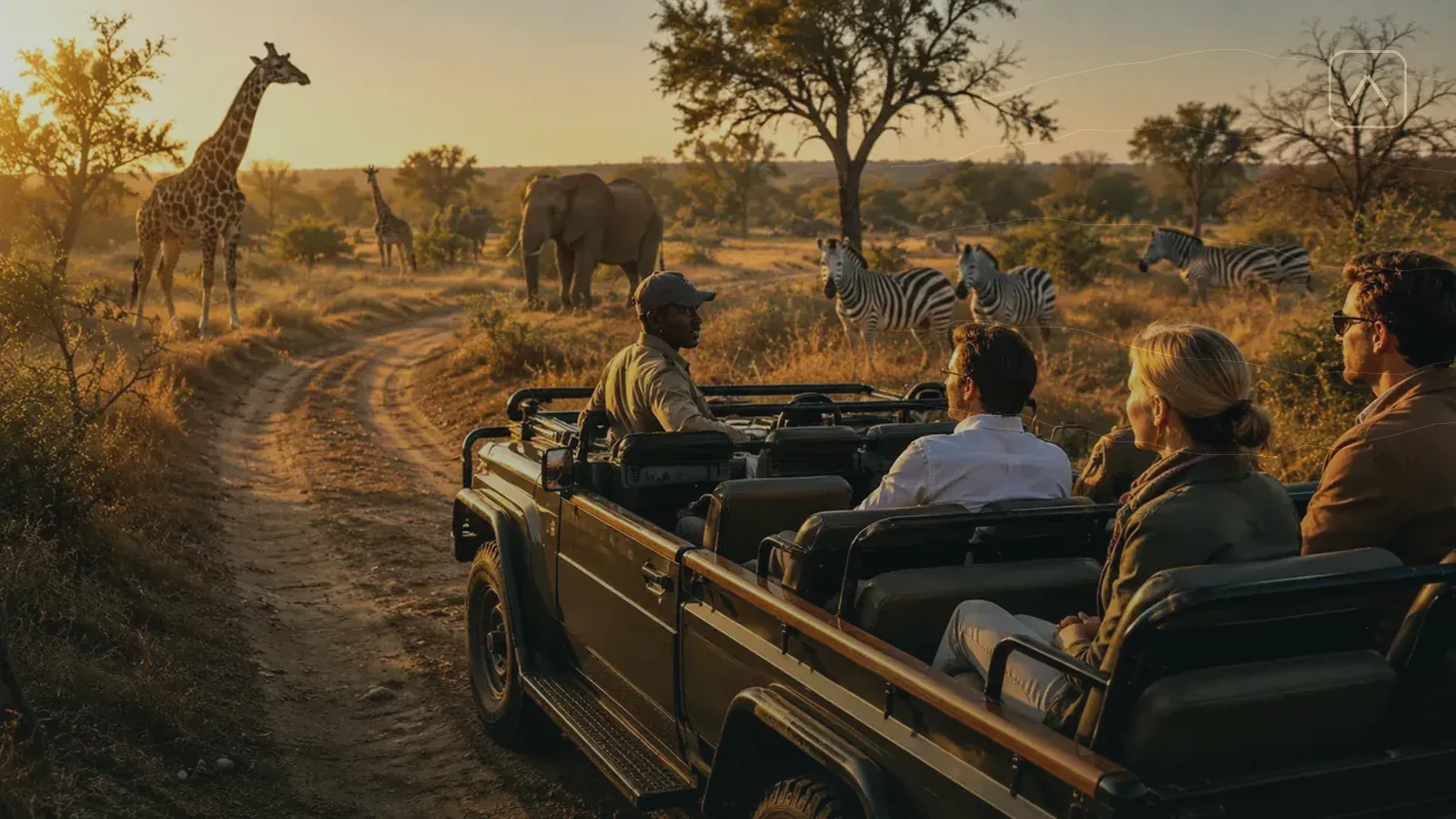
Children rarely remember the route number. They remember the morning everyone stopped talking because a giraffe appeared between the trees.
Book family activities only after confirming the fine print
Guided drives, walks and other experiences may have age, height or safety restrictions. Ask directly rather than assuming a marketplace listing applies to your child. Confirm vehicle type, duration, toilet access, departure point, clothing, car-seat policy and whether the activity returns after dark.
A private guide may be better value for some families because timing, questions and stops can be adapted. For others, self-driving provides enough flexibility. Choose the experience that reduces pressure, not the one that creates the most impressive itinerary.
Check before travelling
Official and practical planning links
Gate times, fees, road conditions, supplier availability and local operating details can change. Use these links as the final check before relying on any time-sensitive detail.
Quick clarifications
Frequently asked questions
Is Marloth Park suitable for toddlers?
It can be, but the property must be assessed carefully for pools, stairs, open decks, wildlife access and sleeping arrangements. Adult supervision remains active, not assumed.
How long should a Kruger drive be with children?
Start with a short morning loop and judge the child rather than the itinerary. Two attentive hours can create better memories than a full day of frustration.
Can children feed zebras or other animals?
No. Feeding habituates wildlife, can cause aggressive behaviour and puts both children and animals at risk.
Should we book a guided drive or self-drive?
A guided drive can add interpretation and give parents a break from navigation, while a self-drive offers flexible stops. Age restrictions and child-seat arrangements must be confirmed directly with the operator.