The useful answer first
What you need to know
Marloth Park is best treated as two holidays working together: an unfenced-feeling wildlife stay around your accommodation and an easy base for southern Kruger day trips. Book a stay that suits your group, arrive before dark with first-night supplies, learn the wildlife rules immediately, and plan each Kruger day around gate times rather than distance alone.
Marloth Park is not a resort with animals added. The wildlife is the setting.
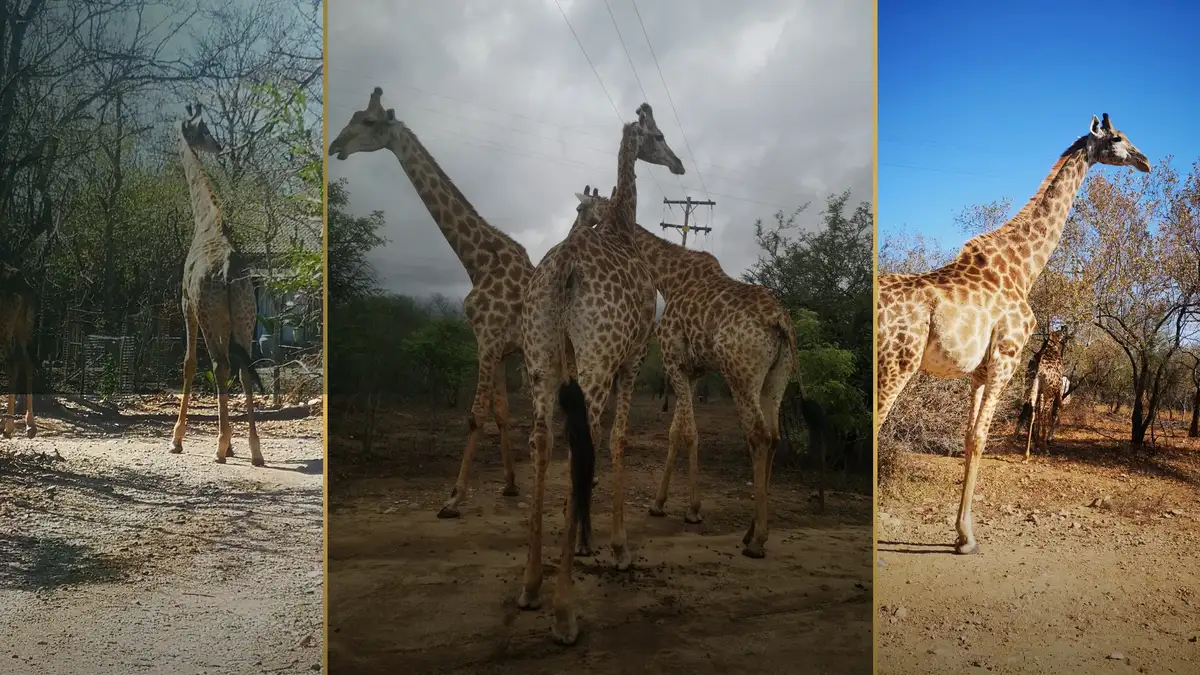
The first surprise is usually not inside Kruger. It happens at the accommodation: a zebra crosses the sandy road, a kudu stands beyond the veranda, or a giraffe moves through the tree line while everyone is still unpacking. Marloth Park sits beside the Crocodile River and faces the southern edge of Kruger National Park, but it has its own pace and identity.
Think of it as a bushveld neighbourhood built around wildlife movement. Holiday homes, lodges, shops and restaurants exist inside that environment rather than replacing it. The result is wonderfully informal, but it also asks visitors to behave differently from how they would in a conventional suburb or fenced holiday complex.
A good Marloth visit is not measured by how many activities you squeeze in. It is measured by how quickly you stop rushing and start noticing.
- Best for
- Wildlife lovers, families, couples, self-drive safari travellers and slower bush breaks
- Main advantage
- Wildlife around the stay plus practical access to southern Kruger
- Main adjustment
- Animals are wild, roads are shared and after-dark decisions need care
- Planning style
- Book the essentials, protect your gate times, then leave room for unplanned moments
Make five decisions before choosing a property
The prettiest listing is not automatically the best stay. A first-time visitor usually needs practical certainty before luxury extras. Start with the questions that shape every day of the trip.
- Choose your group rhythm. A couple planning dawn departures needs something different from a family with young children, grandparents and several vehicles.
- Decide how many Kruger days you genuinely want. If the answer is “most days”, prioritise easy vehicle access, secure parking, simple breakfasts and a layout that makes early departures quiet.
- Confirm power, water and connectivity expectations. Ask what happens during interruptions, which appliances remain available and whether mobile signal or Wi-Fi suits your needs.
- Check the safety details that matter to your party. Pools, stairs, open decks, braai areas and wildlife access affect families differently.
- Understand the final price. Cleaning fees, deposits, minimum stays, cancellation terms and guest limits should be clear before payment.
Build the first evening around daylight, not ambition
Arrival day is where preventable stress begins. The solution is simple: make the first evening operational before trying to make it memorable. Send your host an accurate estimated arrival time, keep the final route accessible offline and aim to arrive with enough daylight to understand the property.
- Fuel the vehicle before the final local leg if the gauge is low.
- Collect drinking water, breakfast food, ice, wood or charcoal, insect repellent and any essential medication.
- Save the host, security and emergency contact details on every adult's phone.
- Check keys, gates, alarm instructions, pool access, outdoor lighting, gas and braai rules.
- Move food out of sight and secure doors and windows before relaxing outside.
- Choose tomorrow's wake-up time and clothes before the group becomes tired.
Overseas visitors should also confirm mobile connectivity, payment methods and driving documents before leaving a major service centre. A travel eSIM can be useful, but it should never be the only place where directions, contacts or booking documents are stored.
Enjoy the closeness without turning a wild animal into a photo prop
Wildlife around homes can appear relaxed because it sees people and vehicles frequently. That does not make it tame. Distance remains the simplest safety system. Do not block an animal's route, crowd it against a wall, invite children to approach or stand between adults and young.
Food is a major boundary. Secure groceries, refuse and leftovers. Never feed primates. Baboons and vervet monkeys learn quickly from access to human food, and one careless encounter can create a problem for the next guest, the property and the animal.
After dark, observe from a secure property area and follow current local rules and your host's instructions. Do not walk down roads to investigate sounds or use a spotlight to chase sightings. Read the full Marloth Park wildlife and safety guide before the first evening.
A successful Kruger day is built backwards from the closing gate
Kruger looks compact on a phone screen and enormous from behind the steering wheel. Legal speeds are low, sightings stop traffic and the most rewarding drives are rarely direct. SANParks publishes approximate minimum travel times between gates and camps, but those times do not include long sightings, queues, meals or photography stops.
Choose the gate first, then the route, then the turn-back point. Crocodile Bridge naturally suits many southern and Lower Sabie-focused days. Malelane opens a different western-southern approach. Neither gate is automatically “better”; the right choice depends on the experience you want and the return margin you can protect.
- Check the current gate opening and closing times on the official SANParks page.
- Carry identification and complete any required visitor registration steps.
- Budget for current conservation fees or valid access products.
- Pack water, food, sun protection, chargers and medication.
- Stay in the vehicle except at clearly designated places.
- Drive below the maximum when conditions, animals or congestion require it.
- Set a conservative turn-back alarm before the day becomes exciting.
Self-drivers should use the Kruger self-drive route guide and the MPC Route Atlas for realistic route selection rather than choosing a destination by reputation alone.
Plan one easy meal and one backup meal
Marloth Park has restaurants, groceries, supplies and practical services, but a bush holiday becomes easier when the first meal does not depend on perfect timing. Keep a simple backup at the accommodation: breakfast ingredients, fruit, water and something that can be prepared if a restaurant is full, a child falls asleep or the group returns late.
Operating hours and availability can change, especially around holidays and quieter periods. Use the MPC local listings to identify current options, then confirm directly before making a special journey.
Four to six nights gives the place room to work
A two-night stay can feel like arrival, one rushed Kruger day and departure. Three nights is a workable introduction. Four to six nights is where most first-time visitors find a better rhythm: two or three Kruger days, one slower Marloth day and enough flexibility for heat, rain, tired children or a late start.
Longer stays do not need more activity. They create space for repetition, and repetition is valuable in the bush. The same road at a different hour can feel entirely new. The animal you missed yesterday may stand beside the house this morning.
The first-time visitor checklist that keeps the trip simple
- Accommodation address, host contact and check-in instructions saved offline.
- Accurate arrival time shared with the host.
- Vehicle, licence, identification and payment method checked.
- Current SANParks gate times and rules checked on the official website.
- One realistic Kruger route selected with a turn-back time.
- Wildlife boundaries explained to every adult and child.
- Food, refuse and doors secured against primates and opportunistic animals.
- Emergency contacts saved and the exact property location understood.
- First-night food, water and lighting ready before dark.
- At least one deliberately slow day left in the plan.
The last point matters. Marloth Park is not only a cheaper place to sleep between Kruger drives. Its value appears when you stop treating the accommodation as a parking bay and allow the wildlife around it to become part of the holiday.
Check before travelling
Official and practical planning links
Gate times, fees, road conditions, supplier availability and local operating details can change. Use these links as the final check before relying on any time-sensitive detail.
Quick clarifications
Frequently asked questions
Is Marloth Park inside Kruger National Park?
No. Marloth Park is a separate wildlife-oriented residential and holiday area beside the Crocodile River, opposite Kruger. Visitors enter Kruger through an official gate such as Crocodile Bridge or Malelane.
Do I need a 4x4 in Marloth Park or Kruger?
A normal roadworthy car is suitable for the standard tourist roads used by most visitors. A vehicle with comfortable ground clearance can make gravel roads easier, but a 4x4 is not required for an ordinary self-drive visit.
Can wildlife enter the garden at my accommodation?
Yes. Zebra, giraffe, kudu, bushbuck, warthog and other animals may move close to homes. That proximity is part of Marloth Park's appeal, but the animals remain wild and must be given space and an escape route.
How many days are enough for a first visit?
Three nights can work for a short introduction, but four to six nights gives a better balance between Kruger days, slower Marloth time and recovery from travel.