01Short, visual activities work best at this age
Ages 3–5 benefit from simple choices, large visual cues and a responsible adult who turns the page into conversation. The objective is not speed or perfect answers. A colouring page, animal-spotting prompt or simple matching activity can hold attention for a few minutes and then be put away when the real environment becomes more interesting.
MPC does not falsify source age guidance. Where an activity’s original source age starts above age 3, the pack uses explicit adult-led mode rather than lowering the source age label.
02The seven Little Explorer activities
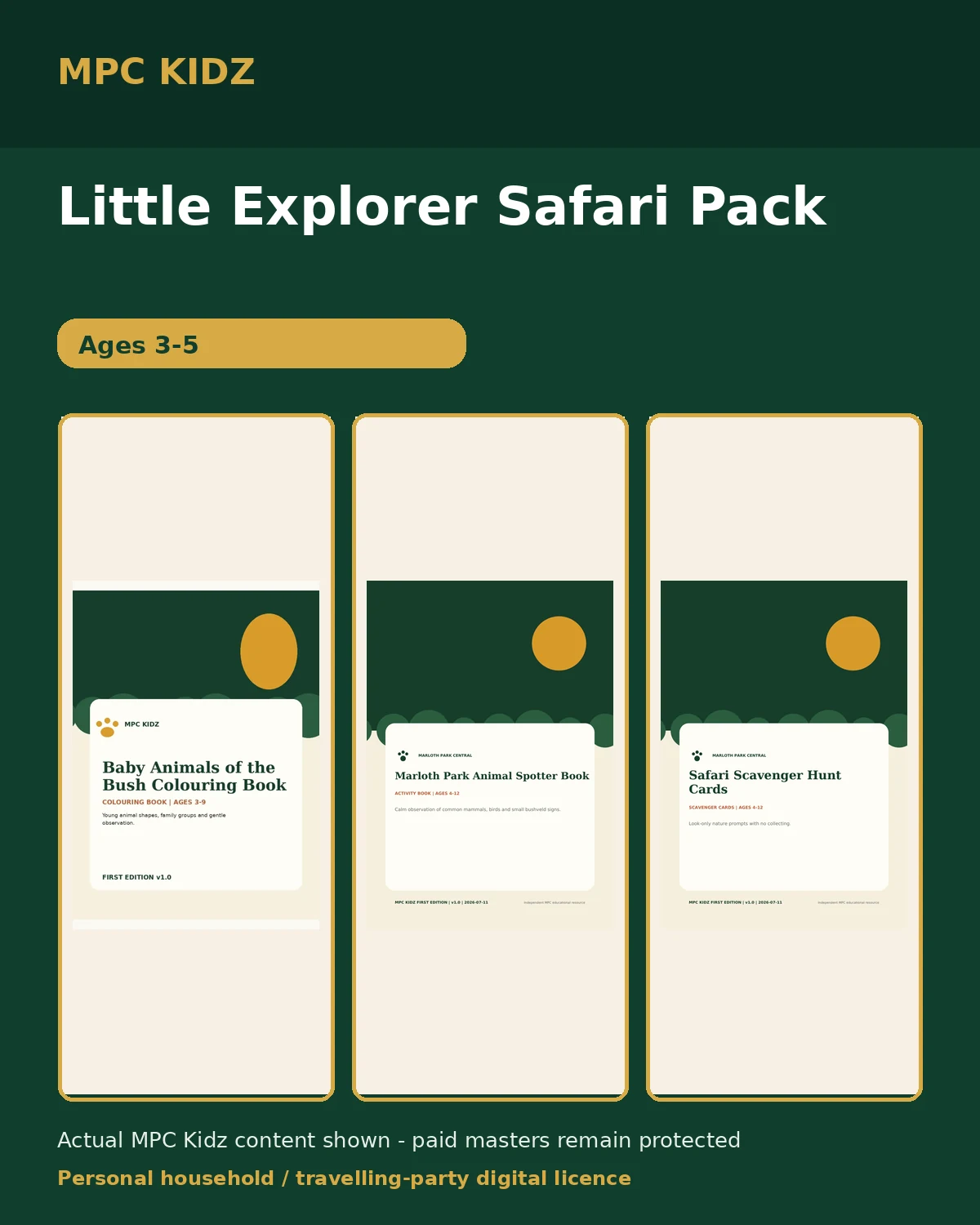
This pack contains Baby Animals of the Bush Colouring Book, Marloth Park Animal Spotter Book, Safari Scavenger Hunt Cards, MPC Kidz Wildlife Passport, Bushveld Wildlife Bingo, My First Safari Journal and African Animal Alphabet Book. Together they cover colouring, noticing, simple game play and memory-making without becoming an oversized school programme.
03Keep real wildlife interaction simple and safe
A preschool safari activity should never require a child to move closer to wildlife. Adults keep children close, secure food, supervise around roads and outside areas, and model calm behaviour. Use pictures, memory and distance-based observation instead of asking a child to touch, feed, chase or pose near an animal.
04Use the pack in small moments
Try one page before breakfast, a short spotting prompt during a safe family observation, and a journal or colouring page after returning indoors. If siblings span other age bands, compare the Family Safari Pack rather than forcing the 3–5 material to serve older children.